

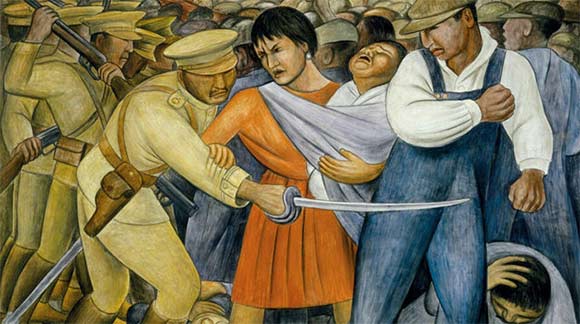
Latin America has once again entered a period of strong social and political turbulence
Interview with Franck Gaudichaud
Franck Gaudichaud recently wrote and coordinated two collective works drawing a critical assessment of “progressive” political attempts to challenge neoliberal hegemony in Latin America. In this interview, he considers the social and political dynamics of the recent period, and also current issues in the region. The interview was conducted by Rosa Moussaoui, journalist and senior reporter for the newspaper L’Humanité.
What is the common political thread to what you call the “progressive experiences” of the early twenty-first century in Latin America?
This characterization is admittedly vague. If we employ it, it is because the people concerned use it themselves, from the Kirchners in Argentina to Alvaro Garcia Linera in Bolivia. These actors, in their diversity, have built a common political space which they have chosen to call “progressive”. This category therefore appears legitimate to us, even if these progressive “left” governments have had very different experiences. On the one hand, there are “national popular” experiences, more or less “radical” in Venezuela, Ecuador, and Bolivia. And on the other, experiences more oriented towards the centre left, including forms of social-liberalism, like the Frente Amplio in Uruguay (among others, under the terms of office of José “Pepe” Mujica), the Brazil of Lula then of Dilma Rousseff. But beyond the category, there are many points in common during the “golden age” of progresismo: a return of the state, criticism of neoliberalism, developmentalist aims. With very heterogeneous political practices.
 Le 11 avril 2021, lors du deuxième tour des élections présidentielles, Guillermo Lasso (52,4 %), le candidat de la droite, a devancé Andres Arauz (47,6 %), le candidat soutenu par Rafael Correa et une partie de la gauche. Lasso a été élu grâce à la division de la gauche car une partie importante de celle-ci, qui a perdu toute confiance dans Rafael Correa, a appelé à voter nul. Les voix du camp populaire, qui était clairement majoritaire au premier tour des élections de février 2021, se sont divisées et cela a permis à un ancien banquier d’être élu président. La situation est grave car une occasion de rompre avec la politique néo libérale brutale de Lenin Moreno a été perdue. L’ex-banquier Lasso, quoique critique par pur électoralisme des positions de Lenin Moreno, va poursuivre le même type d’orientation néfaste : l’approfondissement de politiques néolibérales, la soumission aux intérêts privés du Grand capital, en particulier du puissant secteur bancaire équatorien, du secteur importateur-exportateur et la soumission à la superpuissance nord-américaine. Comment est-il possible qu’une partie importante des voix du camp populaire ne se soit pas reportée sur Andres Arauz pour éviter l’élection de Guillermo Lasso ? Cela s’explique par le rejet qu’a suscité dans une partie de la gauche, notamment dans la CONAIE, la Confédération des nations indigènes de l’Équateur, la politique de Rafael Correa en particulier à partir de 2011.
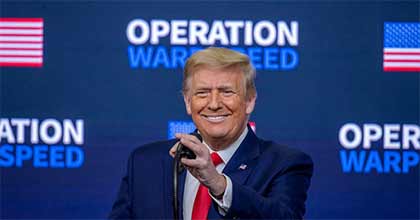 Ever since November 7, when the election was more or less authoritatively “called” by all major media, a wide range of pundits have spoken as if the election was decided. Some of these pundits have explained away Trump’s consistent and angry refusal of the results as a sign of his narcissism and immaturity; some have focused on the ineptitude of the Rudy Giuliani/Jenna Ellis legal team; and some have focused on the important fact that so many judges and state election officials, even Republican ones, have refused to comply with Trump’s efforts to subvert the election. Most recently, attention has focused on the December 8 “Safe Harbor” date prescribed by federal law. The point: the results have now been certified, and Biden obviously must be selected next week by the Electoral College, and Trump’s latest efforts are beside the point.


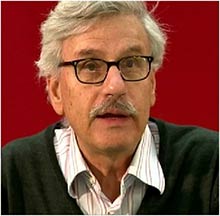 La préoccupation de l'environnement apparaît avec force dans les écrits de Mandel seulement à partir des années 1970. Elle ne figure pratiquement pas, par exemple, dans le Traité d'économie marxiste (1962). Il est vrai qu’on trouve déjà, dans cet ouvrage inaugural , l’idée d’un "arrêt de la croissance" dans le socialisme : " Lorsque la société disposera d’un parc de machines automatiques suffisamment ample pour couvrir tous ses besoins courants (…) il est probable que la croissance économique sera ralentie ou même momentanément arrêtée. L’homme complètement libre de tout souci matériel, économique, sera né. " (1)
 Here we go again. Another black person killed by the US police. Another wave of multiracial resistance. Another cycle of race talk on the corporate media. Another display of diversity with neoliberal leaders, and another white backlash soon to come. Yet this time might be a turning point.
  We are publishing this text from the SUD Santé Sociaux federation, because it reflects the reality encountered by staff in this sector in our different countries.
 The coronavirus pandemic is a serious public health problem and the human suffering caused by the spread of this virus will be enormous. If it massively affects countries of the Global South with very fragile public health systems that have been undermined by 40 years of neo-liberal policies, the death toll will be very high. We must not forget the critical situation of the Iranian population, victim of the blockade imposed by Washington, a blockade that includes medicines and medical equipment.
 I. The ecological crisis is already the most important social and political question of the 21st century, and will become even more so in the coming months and years. The future of the planet, and thus of humanity, will be determined in the coming decades. Calculations by certain scientists as to scenarios for the year 2100 aren’t very useful for two reasons: a) scientific: considering all the retroactive effects impossible to calculate, it is very risky to make projections over a century. B) political: at the end of the century, all of us, our children and grandchildren will be gone, so who cares?
 The expression ‘tipping point’ refers to the point when a system passes from one system of equilibrium to another, the point where it is no longer possible to prevent accumulated quantitative changes from causing a qualitative change. It is used in many different fields, from population studies to climate change, as well as social sciences.