

A summary of the report "Profiting from crisis"
International arbitrage and investor privileges in Greece and Spain
by Giulia Simula
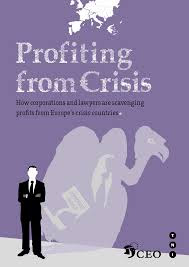 What do international arbitration institutions have in common with Domino’s Pizza, public transport operators, pawnbrokers, discount supermarkets, property auctioneers, and opposition politicians? Answer: all have profited from the global economic downturn. |1| In their report titled: “Profiting from injustice: how law firms arbitrators and financiers are fuelling an investment arbitration boom |2|, CEO (Corporate European Observatory) and TNI (Transnational Institute) have already denounced how corporations take advantage of investor rights in trade and investment agreements to sue governments for million of euros of compensation
If governments take policies of environmental or social protection and these happen to interfere with the profit of multinational corporations, these have the right to bring a government before an international tribunal to demand compensation, for expected revenue that did not materialise. In the current report, the two examples of Greece and Spain illustrate how banks and corporations are profiting from the current crisis through the lucrative practice of international arbitrage |3|.
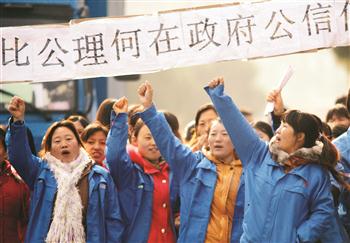 ANN ARBOR—Income inequality has been rising rapidly in China and now surpasses that of the U.S. by a large margin, University of Michigan researchers say.
 À une poignée de semaines des élections européennes, L’Humanité publie une double page de points de vue sur le Front de gauche [1]. Si l’on se fie à ces propos, l’espérance de vie dudit Front est bien courte.
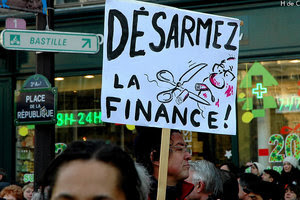 This text proposes a series of concrete alternatives to counter the current crisis shaking Europe. It presents nineteen immediate measures that should be taken vis-à-vis finance in general and the banking sector in particular. In addition to these measures, it proposes to socialise the banking and insurance sectors, and to place them under citizen control. It then examines ten measures to be taken to reverse the crisis in a way that will be favourable to the vast majority of people. 1. Stopping austerity plans; 2. Repudiating all illegitimate, unsustainable, odious, and illegal public debt; 3. Cancelling all illegitimate and illegal private debt; 4. Increasing the resources of public authorities; 5. Decreasing inequalities by establishing fiscal justice; 6. Setting up legitimate government borrowing; 7. Developing and extending public services; 8. Strengthening the pension system based on intergenerational solidarity; 9. Radically decreasing working hours to guarantee jobs for everyone, and adopting an income policy that will bring about social justice; 10. Questioning the basis of the euro and taking action to build a different Europe, which would mean replacing the current treaties based on a true democratic process involving all the peoples of Europe. These are the propositions the CADTM is putting forward for discussion and debate.
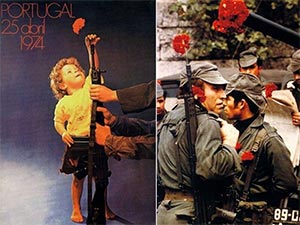 On the eve of April 25, Portuguese society was smouldering from contradictions accumulated in half a century of dictatorship. At the heart of these contradictions was a war that lasted thirteen years, to hold on to the African colonies of Angola, Mozambique, Guinea, Cape Verde and Sao Tome and Principe. This conflict conditioned the whole of national life, because of the social suffering caused by the mobilization of two hundred thousand men, a tenth of the working population (a human cost equivalent to twice that of Vietnam), because of the wave of migration driven by hunger and the war, and because of the impossibility of a military solution, the only one contemplated by the regime.
 Le scrutin législatif en cours revêt une importance toute particulière pour l’Inde, le favori des sondages promouvant un nationalisme agressif d’extrême droite, racial et religieux.
 1) The last municipal elections represent a new worsening of the political balance of forces for the left and the labour movement. 150 cities of more than 10,000 inhabitants swung from SP or CP-led to the right or far right.
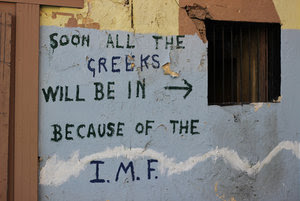 Le CADTM tient à apporter son soutien au peuple grec qui s’oppose aux diktats de la Troïka (Commission européenne, Banque centrale européenne, FMI). Les nouveaux prêts accordés en 2014 sont liés à un paquet de mesures antisociales qui vont dégrader un peu plus les conditions de vie de la majorité de la population grecque.
 Last year, the Intergovernmental Panel on Climate Change started the publication of its 5th Assessment Report (or AR5), initially showing the work by the Working Group I, which deals with the physical basis of climate change. Now, the AR5 process continued with the publication of the “Summary for Policy Makers” by the Working Group II, concerning “impacts, adaptation and vulnerability.”
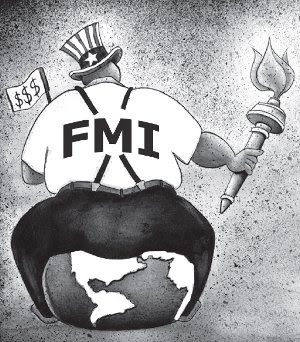 As the International Monetary Fund (IMF) prepares for its Spring meetings, new research reveals that the number of conditions it attaches to its loans are rising – and they continue to be linked to harsh austerity measures and interfere in sensitive policy areas. Conditionally Yours: An analysis of the policy conditions attached to IMF loans is the latest in a series of reports on the IMF’s lending practices produced by the European Network on Debt and Development (Eurodad) over the past decade.
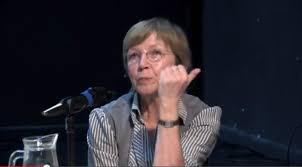 Les élections présidentielles du 25 mai ne stabiliseront pas le pays. Il faut que la population de toutes les régions soit saisie des grands enjeux et détermine ses droit sociaux et nationaux sur la base de l'indépendance du pays.
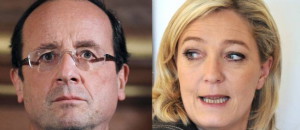 Le premier tour des élections municipales a rendu son verdict et il est national. Le Parti socialiste et donc le gouvernement et le président de la République subissent la sanction qu’ils espéraient éviter. L’UMP ne capitalise pas franchement sur cet échec. Mais le Front national en fait son miel. Au-delà de la victoire de Steeve Briois dès le premier tour et de ses bons résultats dans plusieurs autres villes, le FN a déjà fait élire 456 représentants dans les conseils municipaux…
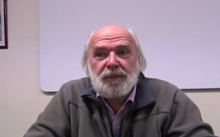 “Here in Europe, the European Central Bank is not allowed to lend money to member States, so the monopoly for lending money to the public powers in the Euro zone is left in the hands of the private bankers who take full advantage of this in order to set the kind of interest rates that benefit them the most. In other words, they currently lend money to the BCE at 0.25% and then proceed to lend Italy money at 4%. When things are going badly for Italy, they lend us money at 6-7%. The citizens have to take the initiative when it comes to conducting a “debt audit”, asking the right questions and coming up with the answers themselves, without being too concerned about the fact that there is a major economics and finance expert.”
  Why does Bosnia-Herzegovina inspire so little interest and curiosity in the media and the political class when, on the contrary, Ukraine is front-page news? Is it because of its non-membership of the European Union? Is it because its name evokes the war that, twenty years ago, claimed the lives of hundreds of thousands of men and women – more than 200,000 dead and 600,000 exiles – in the face of virtual indifference in the West as to what was happening one and a half hours by plane from Paris ? Or because it often wakes up to the call of the muezzin?