


All That Remains
The journey of a 13-year-old amputee from Gaza named Leyan as she seeks treatment in the US.
Leyan Abu al-Atta, a 13-year-old girl from Gaza who lost her leg in an Israeli attack, is one of thousands of children who have lost limbs in this war in what experts say is likely one of the most intense mass-disabling events of children in our lifetimes.
Fault Lines follows Leyan’s journey as she makes her way to the United States for medical treatment in the hopes of overcoming a spinal cord injury and walking again on prosthetic legs. Along the way, we witness Leyan’s perseverance, her family’s unwavering love in the wake of her life-changing injury and an intimate portrait of what lies ahead for the child amputees of Gaza.
 What is driving neofascist movements to question, to varying degrees, the reality of climate change, or at least its connection to human behaviour?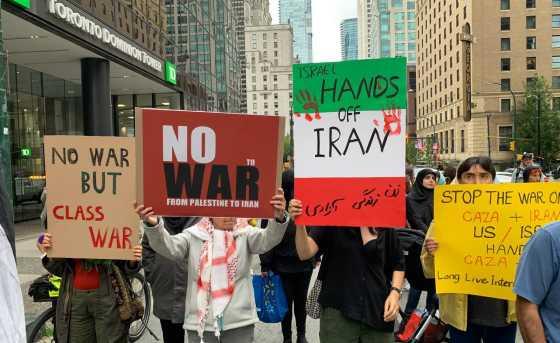
 The Syndicate of Workers of Tehran and Suburbs Bus Company, a member of the International Trade Union Solidarity and Struggle Network, is transmitting this text, signed with other independent organisations in Iran:
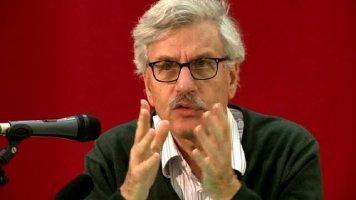 Marxist scholar Michael Löwy, responding to Samuel Farber’s “In Defense of Progress” from the new issue of Jacobin, defends philosopher Walter Benjamin and argues that “progress,” as defined under capitalism, has come to threaten humanity’s very survival.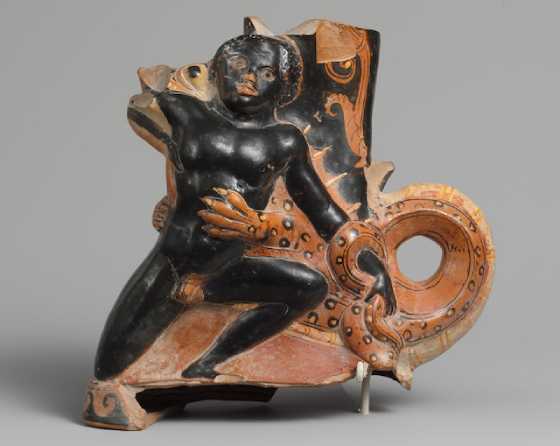


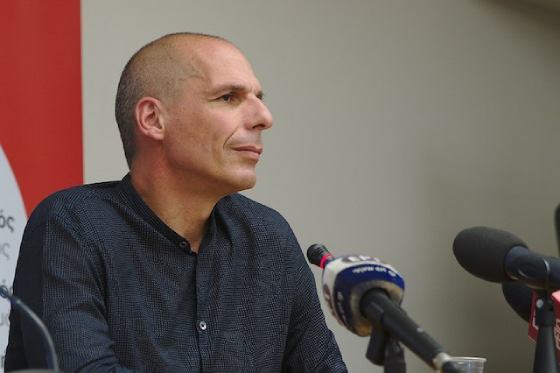
 25 January 2015, at a time when Greece had been suffering since 2010 under the burden of a severe austerity regime forced on the country by its creditors and by the social-democrat (Pasok) and conservative (New Democracy) parties who have taken turns exercising power in the country, Syriza (an acronym whose Greek meaning is “coalition of the radical Left”) won the legislative elections in Greece, with 149 deputies out of a total 300. Lacking an absolute majority in the Hellenic Parliament, Syriza formed a coalition government with ANEL (a small “souverainist” right-wing organization which announced that like Syriza, its priority was to put an end to the austerity policies). Syriza’s leader, Alexis Tsipras, became prime minister and appointed Yanis Varoufakis, a left-leaning economist close to Syriza, his finance minister.
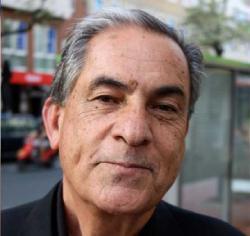 And what if U.S. President Donald Trump suggested setting up death camps for the inhabitants of the Gaza Strip? What would happen then? Israel would respond exactly as it did to his transfer ideas, with ecstasy on the right and indifference in the centrist camp.
 There are two conspicuous myths about the Gaza ceasefire that went into effect last Sunday: that it was due to Trump’s pressure on Netanyahu and that it was a victory achieved by Hamas.
 I am both Ukrainian and Jordanian of Palestinian origin. My mom is from Ukraine and my dad is a Palestinian-Jordanian. And there are a lot of people like me that come from this particular mix of heritage because many people studied in the former USSR. This is how my parents met. So I was born and raised in Ukraine, and then we moved to Jordan in 2003: I remember this date very well because it was the year when there was war in Iraq. So basically, both countries are my homeland. But all my childhood memories and growing up are related to Ukraine - it's my home.